School of Geography and Sustainable Development
SDG Engagement within the School
As a University, we are currently in the beginning stages of engaging with the Sustainable Development Goals. Some data collection is still under critical debate and so the images below show an initial display of how the School of Geography and Sustainable Development currently feel they are most engaging with the goals. The SDGs highlighted in colour indicate that there is some degree of engagement with the goal, and those in grey are not currently engaged with during teaching.
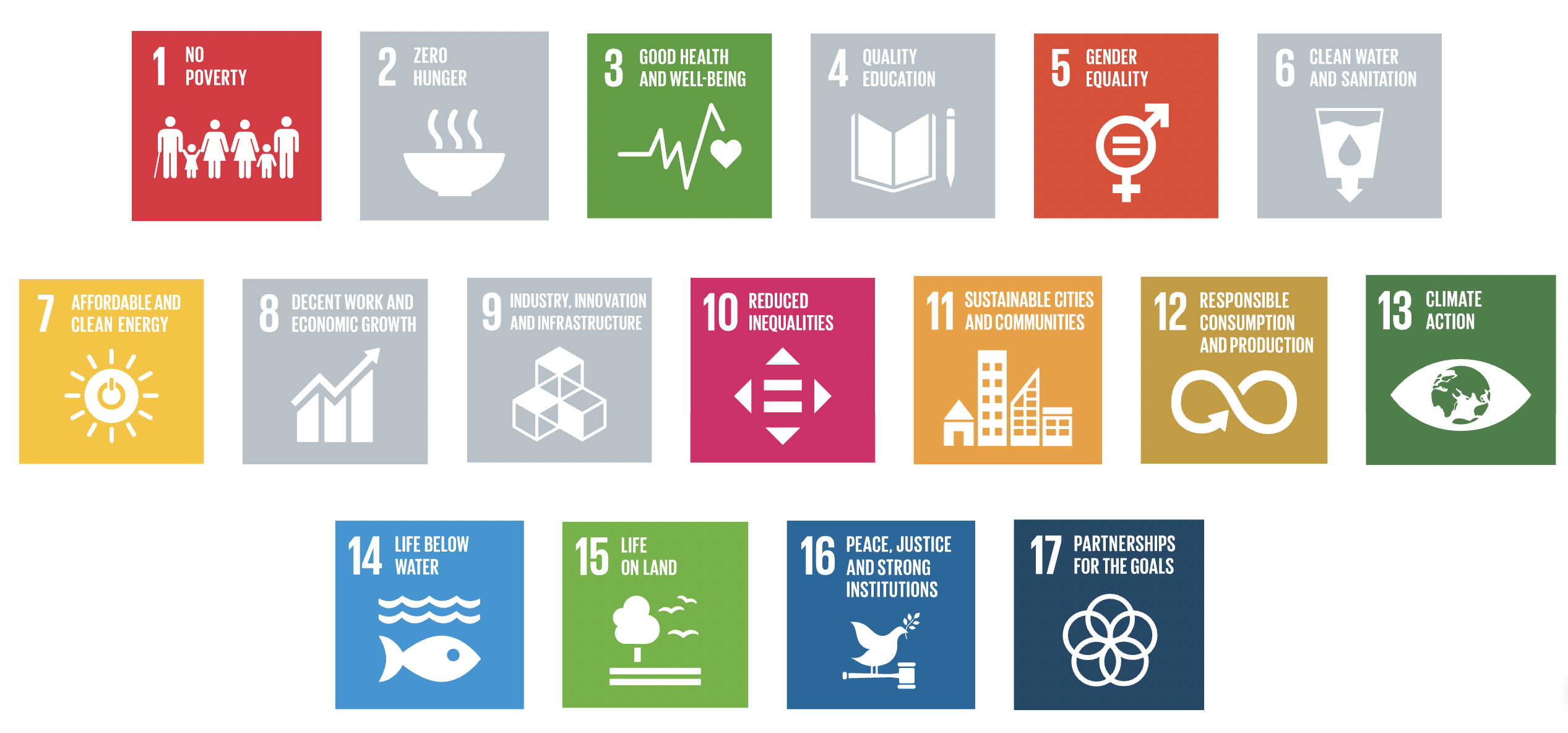
SDG Coverage Across Modules and Teaching in the School
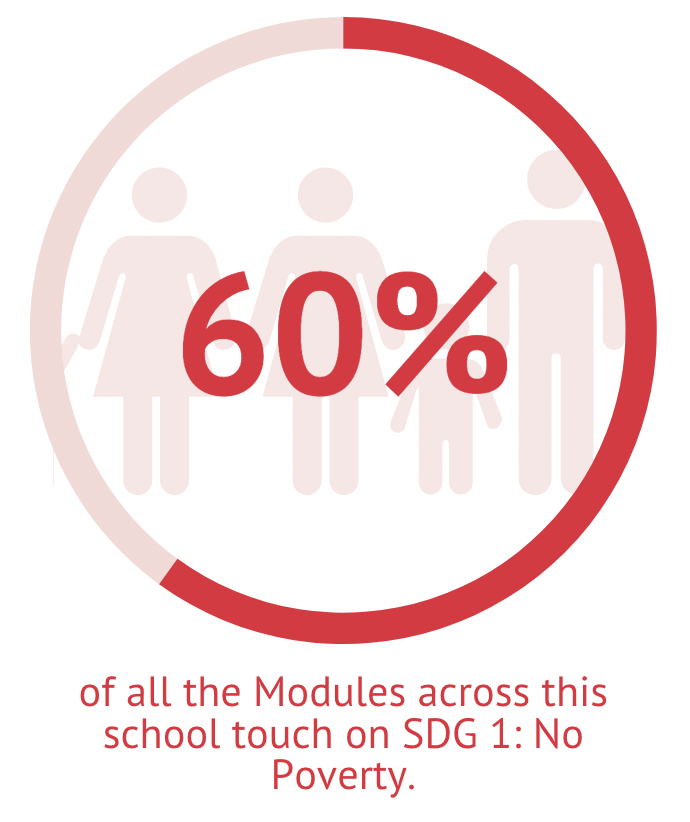
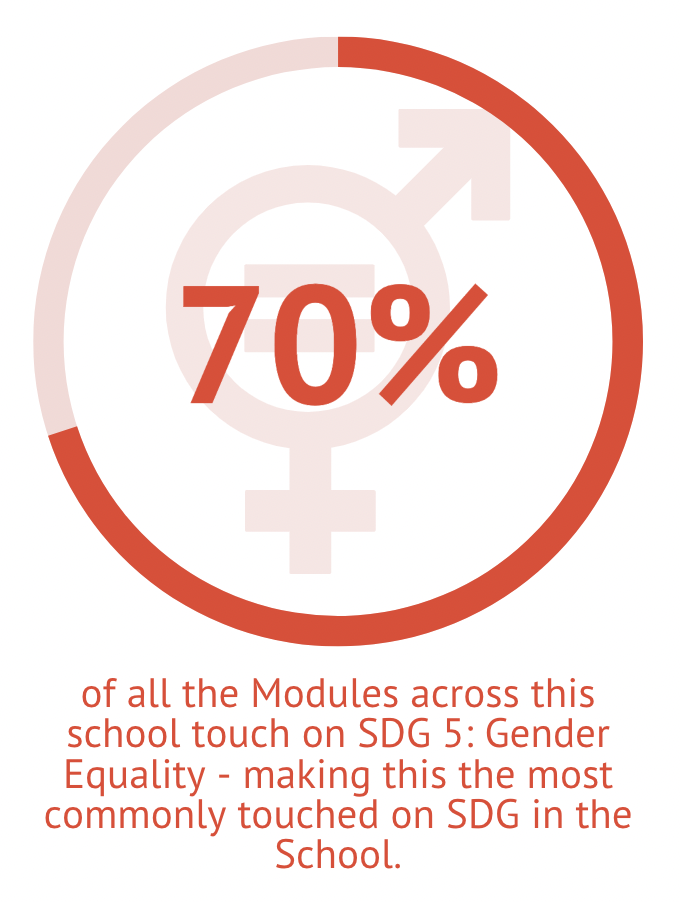
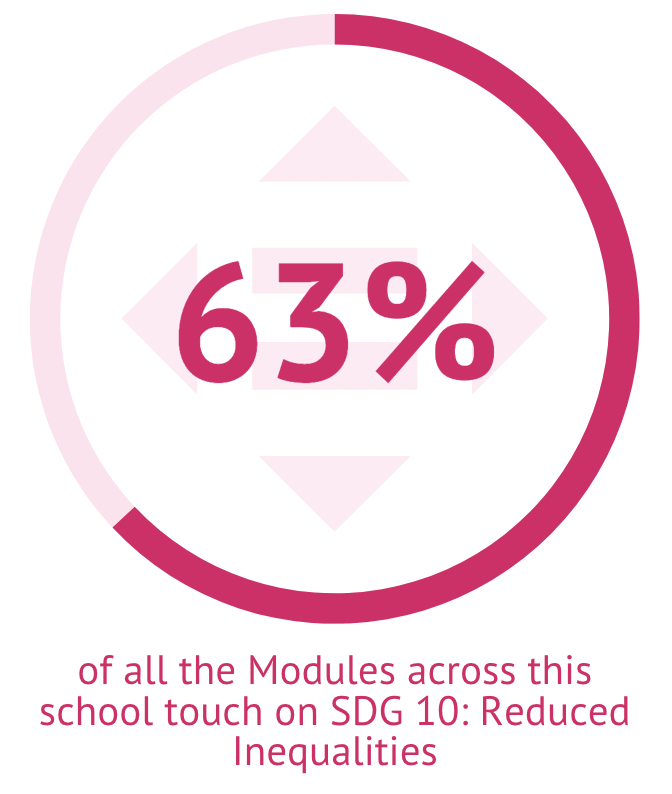
The images below indicate the percentage of Modules which engage with each Sustainable Development Goal within teaching in the School of Geography and Sustainable Development. It is important to note that the percentages displayed here are based on the total number of Modules which have been analysed for their SDG engagement, not necessarily indicative of every live Module in the School.


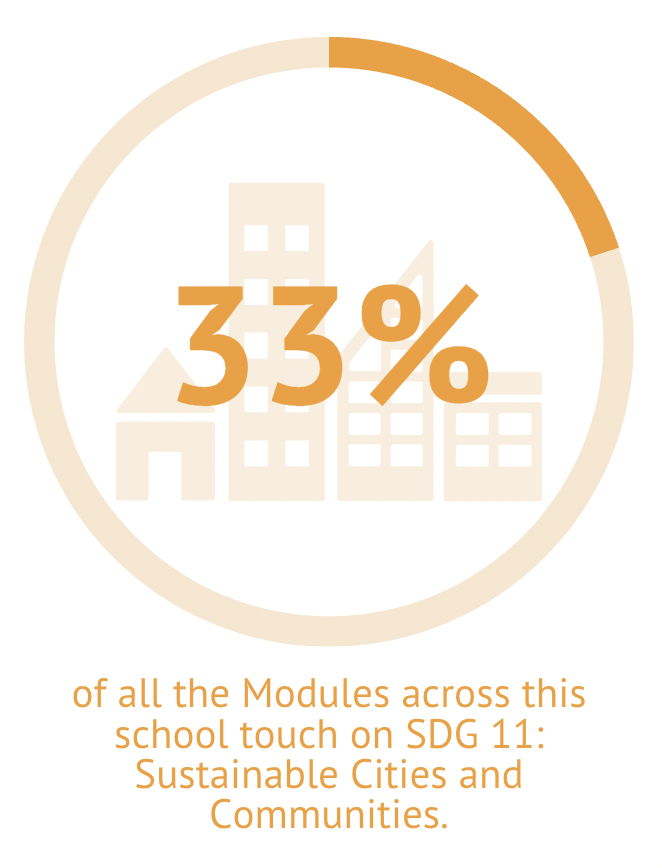


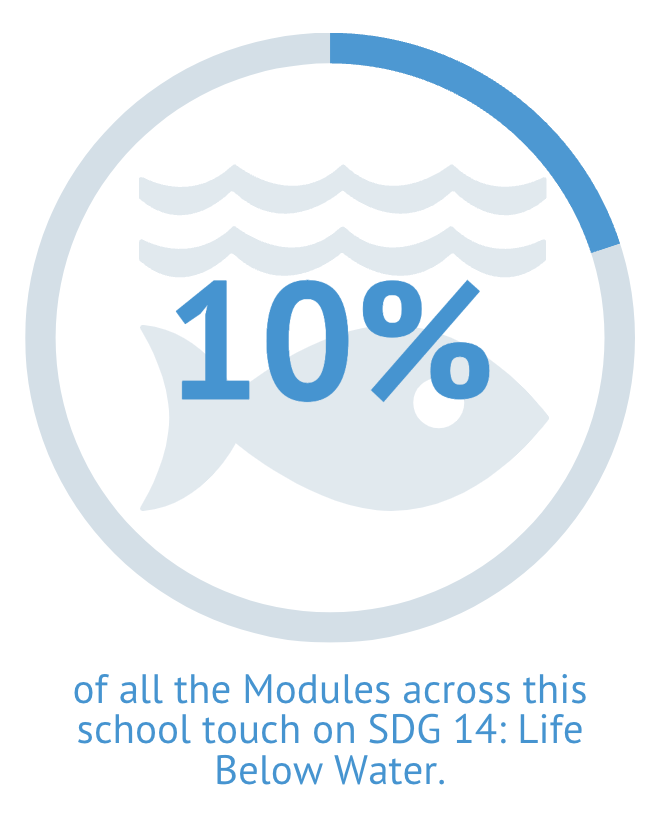
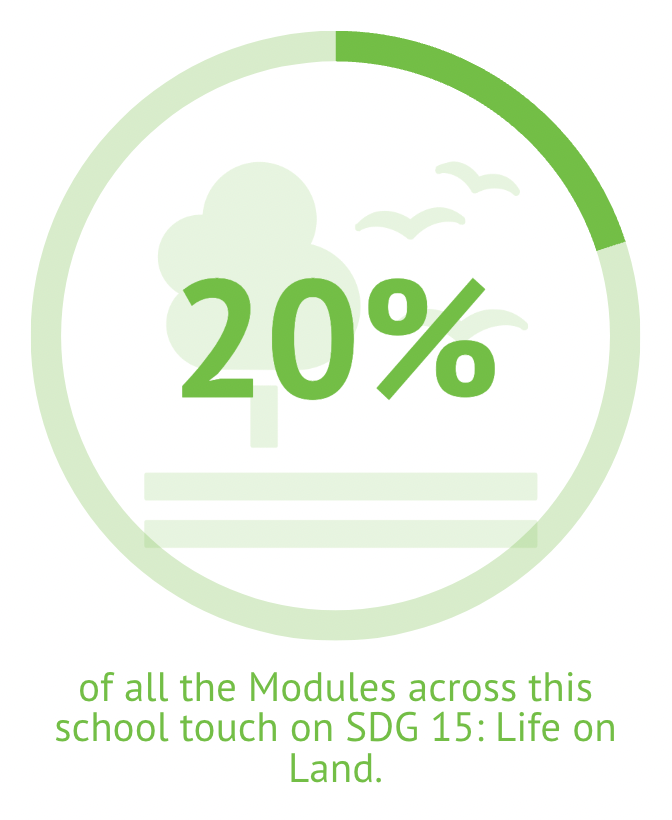


Our Data
Click here to find out more about our data collection process and analysis.
An Unexpected Story
The unexpected stories is a space for Schools to share in more details how a Module covers an SDG which may not be so evident at first. The SDGs are more intertwined with the work students undertake at the University than first may appear, and it is important to recognise this.

The module SD4110 Transitioning to sustainability: Community, nature and governance aims to explore how communities of place, interest, practice and value can contribute to the transition(s) to sustainability, drawing on local and international case studies and critiquing the contested concept of community itself. It takes a systems approach to sustainable development (all SDGs), facilitating discussion of how governance (especially SDGs 16 and 17) can support social justice and equality (SDGs 5 and 10) and other social benefits (SDGs 1, 2, 3) and ecological integrity (SDGs 14 and 15) in and for communities (SDG 11), especially via community action (SDG 13) and learning (SDG 4). Part of the module explores the role of art in helping individuals and communities envisage and enact sustainable futures. Last year, a professional artist who also works in therapy ran an activity in which students each crafted an item in class using provided eclectic (mostly nature based) materials. Students were asked to gift their item to another student, and then to destroy them, then remake and gift them back. This process generated focus, emotion and discussion of the role of art in self awareness and mental wellbeing, relationships and imagination. It was an unexpected insight into how important art can be in the transition to sustainability. It also highlighted how many issues and processes are not fully captured in the SDGs, enabling us to constructively critique that framework.

Have you realised something unexpectedly sustainability related during your studies?